
By Charlotte King
For the past few months, I have been completing my MSc dissertation project with the support of Envance and the Environment Agency. This work centred around Spains Hall Estate, located in Finchingfield, Essex, with the aim of providing a valuation of ecosystem services present at the site, as well as evaluating the effectiveness of natural capital tools used in this valuation.
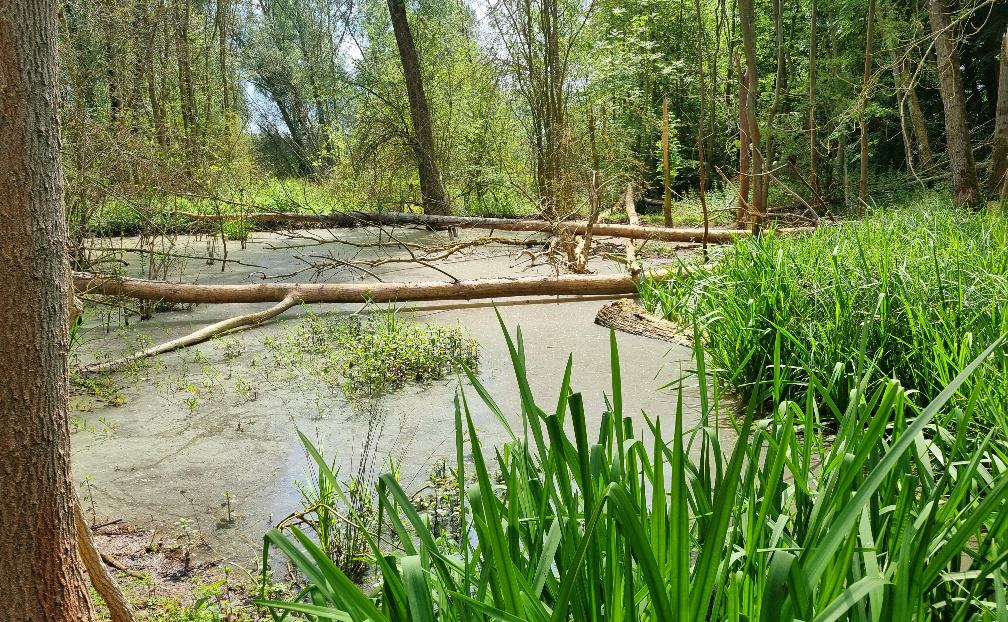
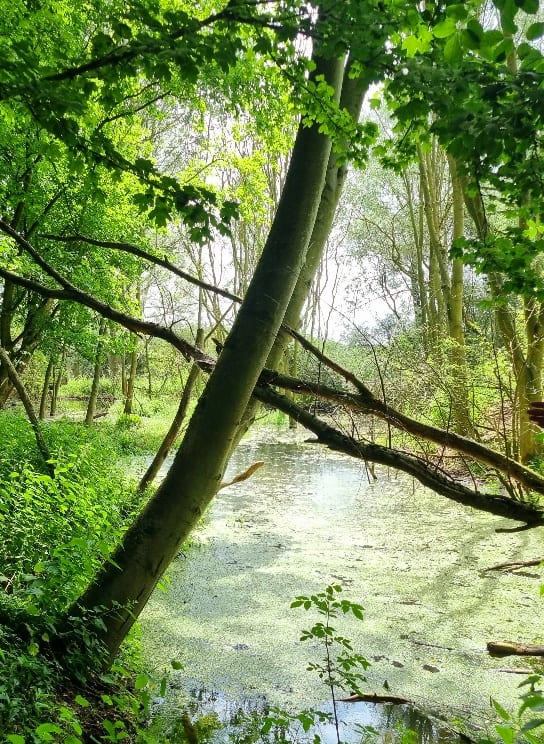
The chosen study areas within Spains Hall were the current beaver enclosure, a four-hectare site, occupied by Eurasian beavers since 2019. It is believed that as of June 2022, six beavers are established at the site, and this has resulted in significant land cover change from deciduous woodland to predominantly wet woodland. The second study area was a 38-hectare site composed of arable land used for agricultural purposes and marked for future development as a new larger beaver enclosure, separate to the current site. I was lucky enough to visit the estate in June 2022 and see first hand the environmental work that has been achieved so far. The extensive damming of the nearby stream, and creation of wet woodland was extremely impressive, and it is easy to understand why work involving the beavers has been so high profile, in particular the role of beavers in reducing flood risk to Finchingfield residents.
With this in mind, it was of great interest to observe whether visible changes at the study sites would translate to improvements in natural capital value. Initially, a screening process was utilised to identify natural capital tools that would be most suitable for use in the study area. The tools selected based on this process were the Benefits Estimation Tool (B£ST), an excel spreadsheet tool providing baseline and projected values for ecosystems as a result of a proposed development (e.g., the introduction of a beaver colony), and the Environment Agency’s Natural Capital Register and Account Tool (NCRAT), which was also excel spreadsheet based and showed current and predicted values for ecosystem services over 100 years. Additionally, a number of non-monetary value tools were used; these were the Natural England’s Evaluating the Benefits of Nature Tool (EBN) and the Biodiversity Metric 3.1.
Metrics such as land cover and spatial characteristics were inputted into the tools and presented as a set of tables and graphs, demonstrating the value of ecosystem services presently and how they are predicted to change on a temporal scale. Key findings for the study areas were that the beavers will have a positive impact on flood risk, and human health through beaver presence presenting increased opportunities for people to interact with nature. Long term improvements show the vital role that beavers could pose in improving river water quality and climate regulation, this is extremely topical considering the UK Government’s requirement for greenhouse house emissions to be zero by 2050. In non-monetary terms, the presence of beavers at both sites is also likely to improve biodiversity, demonstrated by an increase in biodiversity units over 30 years.
However, perhaps the most important findings for this research related to the tools themselves and their effectiveness. In summary, these findings were:
My dissertation provided a snapshot into a range of natural capital accounting tools and their relevance and suitability in assessing the changes in habitats and land use form various Natural Flood Management interventions using Spains Hall Estate as a case study. Throughout the project, it was evident that there is a sizable knowledge gap within this field, providing an exciting opening for further investigation, particularly the role natural capital can play in incentivising positive environmental activity.